If you're the one responsible for getting a team, a family travel group, or a supporters' crew to the North American Sand Soccer Championship at Virginia Beach, you already know the tournament will be the easy part. The hard part is coordinating a dozen families in separate cars, navigating Virginia Beach Oceanfront traffic on a packed summer weekend, and hunting for parking that can cost as much as a restaurant bill — only to watch half the group scatter across a garage two blocks from the beach while kickoff approaches.
This guide is written for exactly that person: the team coordinator, the club manager, the parent volunteer who drew the short straw on transportation logistics. We're Party Bus Virginia Beach, and we move teams, families, and fan groups to major Virginia Beach Oceanfront events every summer. Below, you'll find what the oceanfront drop-off situation actually looks like during a tournament weekend, which vehicle fits your headcount and gear load, what shapes the price of a charter, how far the drive is from every major feeder market along the East Coast, and the multi-day logistics that make a tournament trip run smoothly from the first morning match to the championship final.
By the time you've read this, the transportation piece will be handled — and your biggest worry can go back to being the bracket.
Tournament Location
Virginia Beach Oceanfront — Atlantic Avenue corridor
Typical Timing
Late June, multi-day weekend format
Oceanfront Parking
City garages fill early — often before 9 a.m. on tournament mornings
Key Route Bottleneck
Hampton Roads Bridge-Tunnel on I-64 East — add 30–60 min on peak Fridays
Alternate Route South
Monitor-Merrimac Bridge-Tunnel via I-664 bypasses HRBT
Best group size for a bus
~14 to 56 passengers in one vehicle
What Is the North American Sand Soccer Championship?
The North American Sand Soccer Championship is one of the largest and most established competitive sand soccer events on the continent, held annually at the Virginia Beach Oceanfront. The tournament draws thousands of players from across the United States, Canada, and beyond, competing across youth and adult divisions on temporary sand pitches set up directly on the Atlantic Coast shoreline. What makes it unlike most soccer tournaments is the venue itself: there is no stadium, no artificial turf, no indoor facility.
The fields are staked out on the actual beach, with the Atlantic Ocean behind the goals and the Virginia Beach Boardwalk at your back.
The event typically spans a long weekend in late June — already one of the most congested periods on Virginia Beach's summer calendar. If you're traveling from Washington D.C., Richmond, Charlotte, Raleigh, Baltimore, or anywhere else along the East Coast corridor, you're joining a massive wave of teams, families, and spectators all converging on one of the most logistically constrained strips of beachfront real estate in Virginia. Atlantic Avenue is never a quick drive during peak summer, and during tournament weekend it becomes a genuine test of patience for anyone navigating it in a private car.
That context matters — because the challenge isn't just getting to Virginia Beach. It's getting to the right section of Atlantic Avenue, on the right morning, with all your gear, with your full team, with enough buffer to check in and warm up. A single charter bus solves all of that in one booking.
Virginia Beach Oceanfront Parking During Tournament Weekend: The Real Picture
Virginia Beach has been hosting major oceanfront events for decades, and the city manages its parking accordingly — which means a limited supply of garages and surface lots spread along an Atlantic Avenue corridor that gets genuinely overwhelmed on peak summer weekends. The North American Sand Soccer Championship is one of those weekends, and the parking situation reflects it.
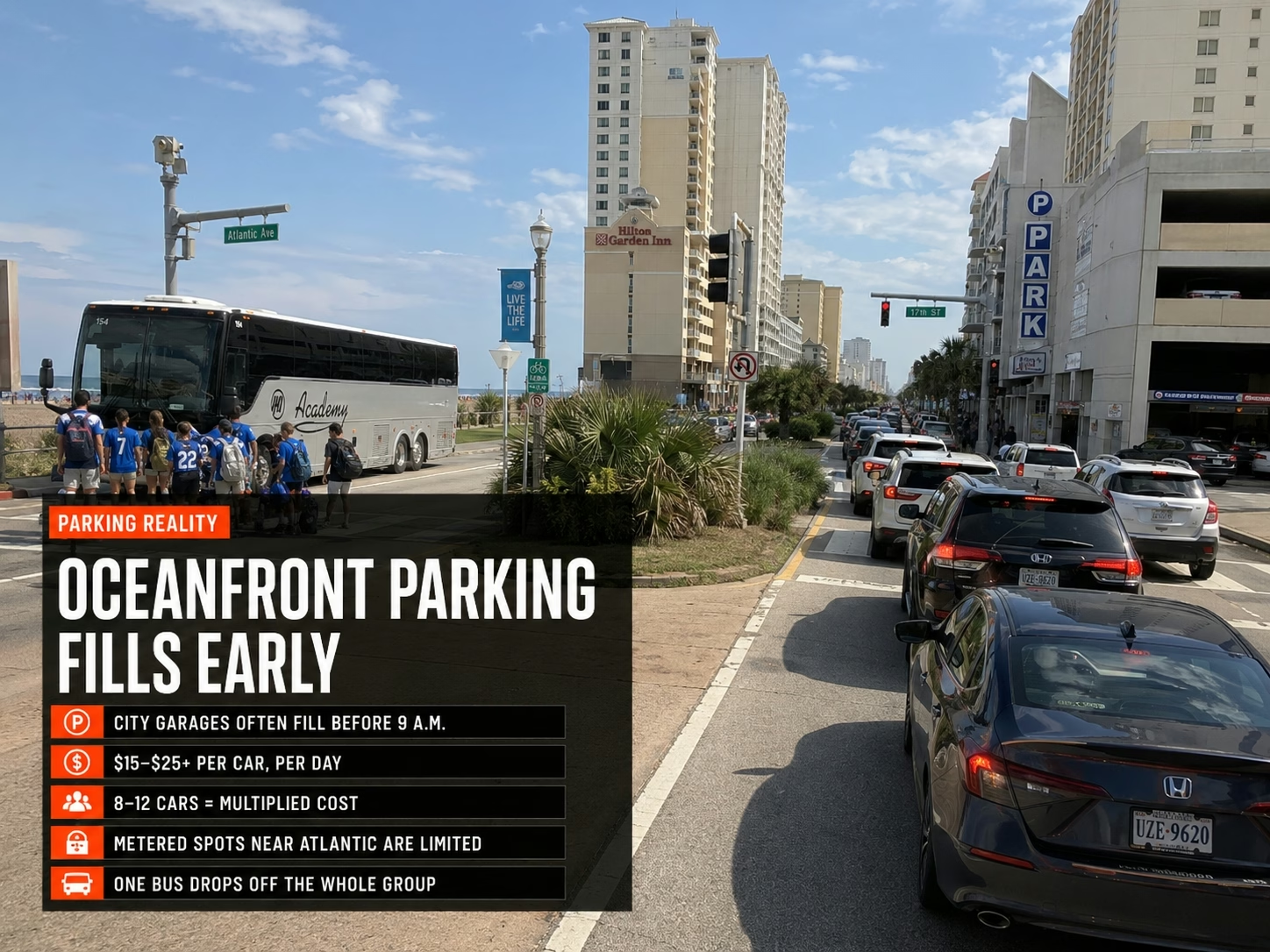
The city-operated parking garages at numbered street intersections along the oceanfront are the primary option for event visitors. During peak summer events, these fill quickly — often before 9:00 a.m. on busy tournament mornings — and daily parking rates at oceanfront-area garages can run $15–$25 or higher depending on the event and how close to the action you park. Surface lots in the immediate area are no more plentiful.
Metered street parking along Atlantic Avenue is available but extremely limited during events, and spots within walking distance of the tournament fields disappear early.
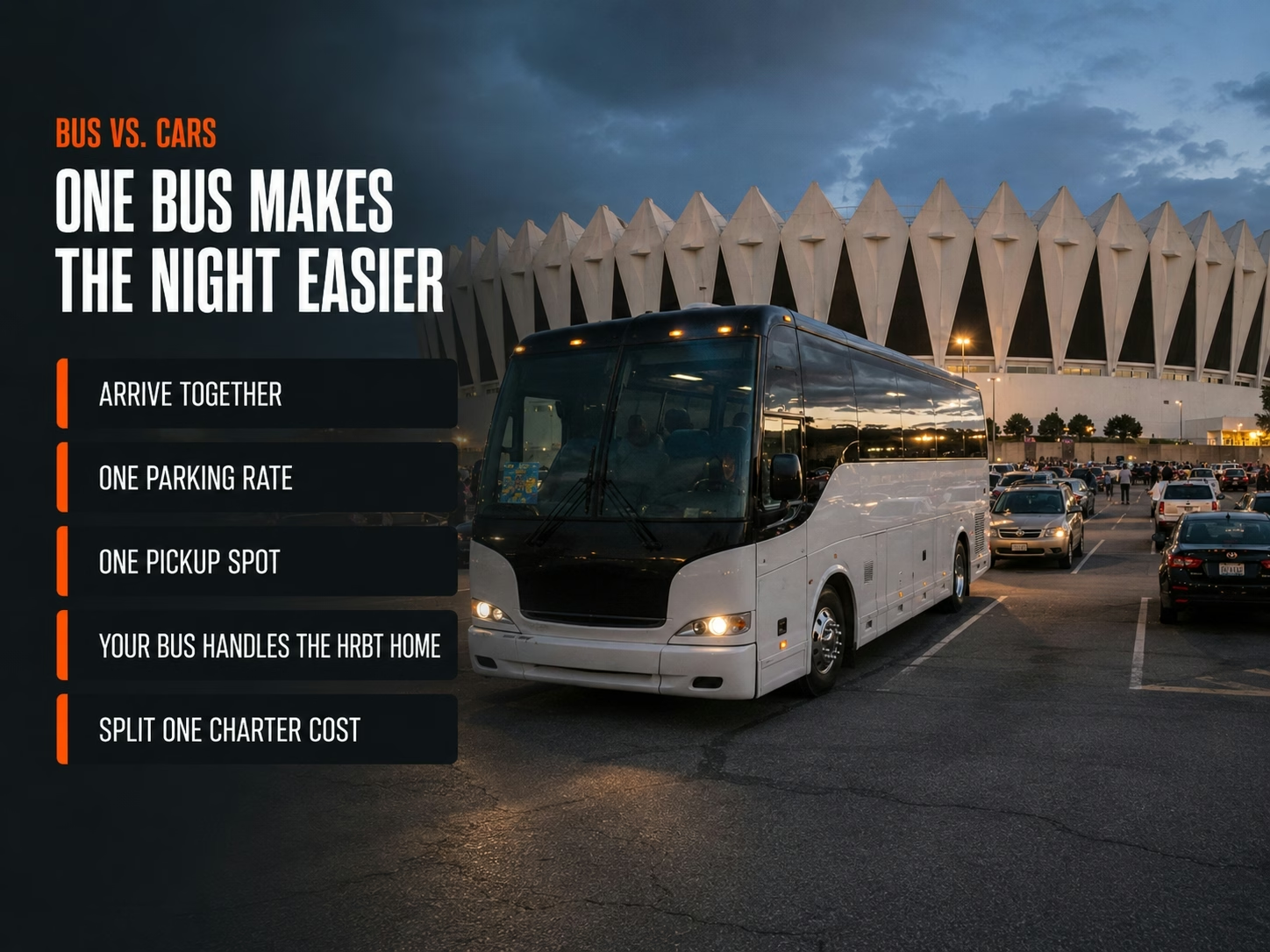
The math for a team of 20 players, coaches, and family members is straightforward. If every family drives separately, you're looking at 8–12 cars, each paying full parking, each arriving at a different time, each navigating different turns toward the same destination. Coaches and parents spend the first 45 minutes of tournament morning fielding texts from families who took the wrong exit off I-64.
Meanwhile, the team that chartered one bus walked off at a single designated drop-off together, checked in as a unit, and is already warming up on the sand.
For current parking garage locations, event-specific rates, and any tournament weekend parking guidance, check the Visit Virginia Beach website and the official tournament page ahead of your travel date — rates and garage hours shift event to event.
Where Buses Drop Off at the Virginia Beach Oceanfront: The Logistics Explained
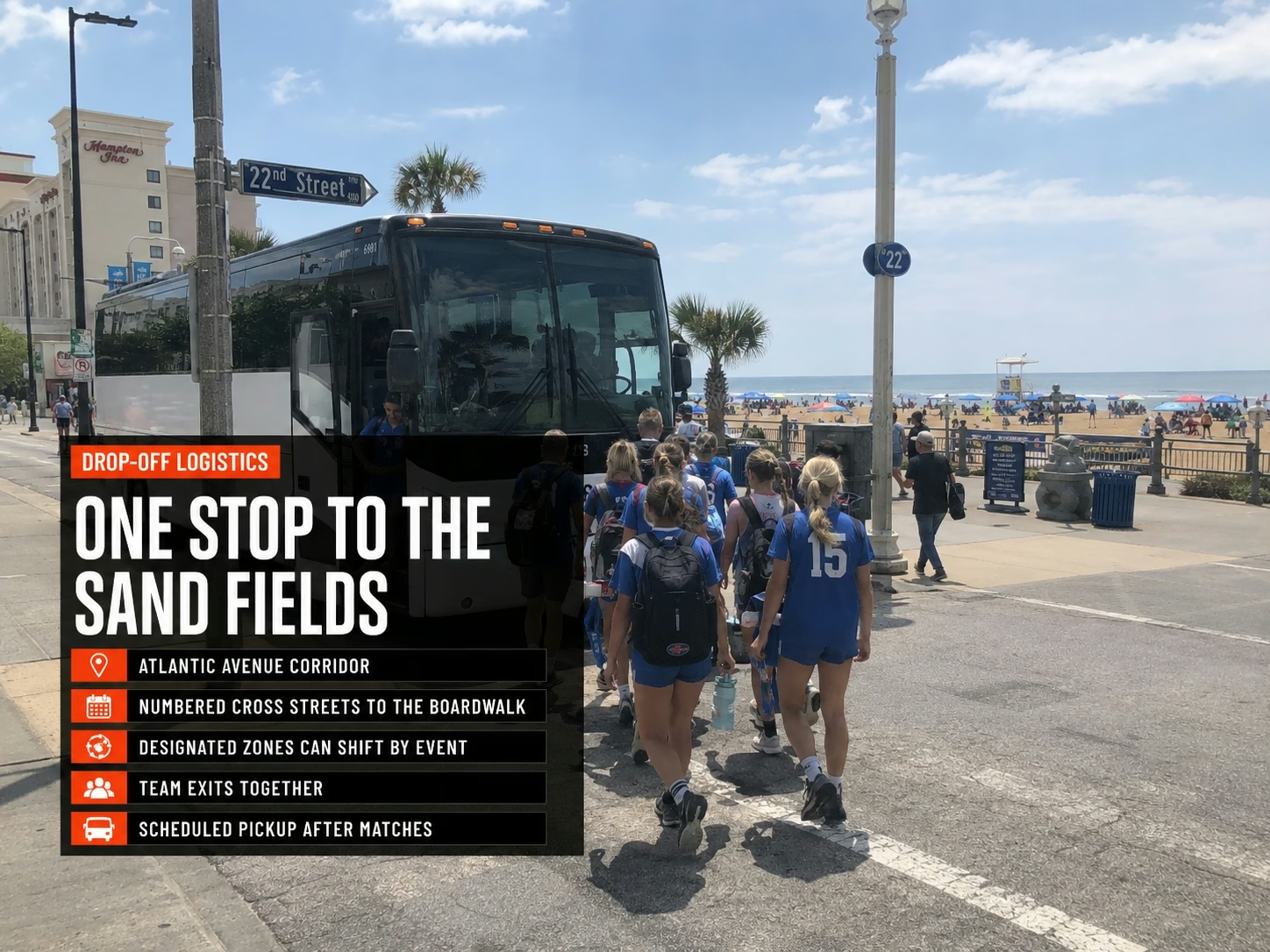
Virginia Beach's oceanfront street grid is easy to understand: Atlantic Avenue runs parallel to the ocean for miles, with numbered cross streets cutting perpendicular toward the beach and the boardwalk. The tournament fields are set up on the sand itself, accessible from the boardwalk, which runs the full length of the Atlantic Avenue corridor.
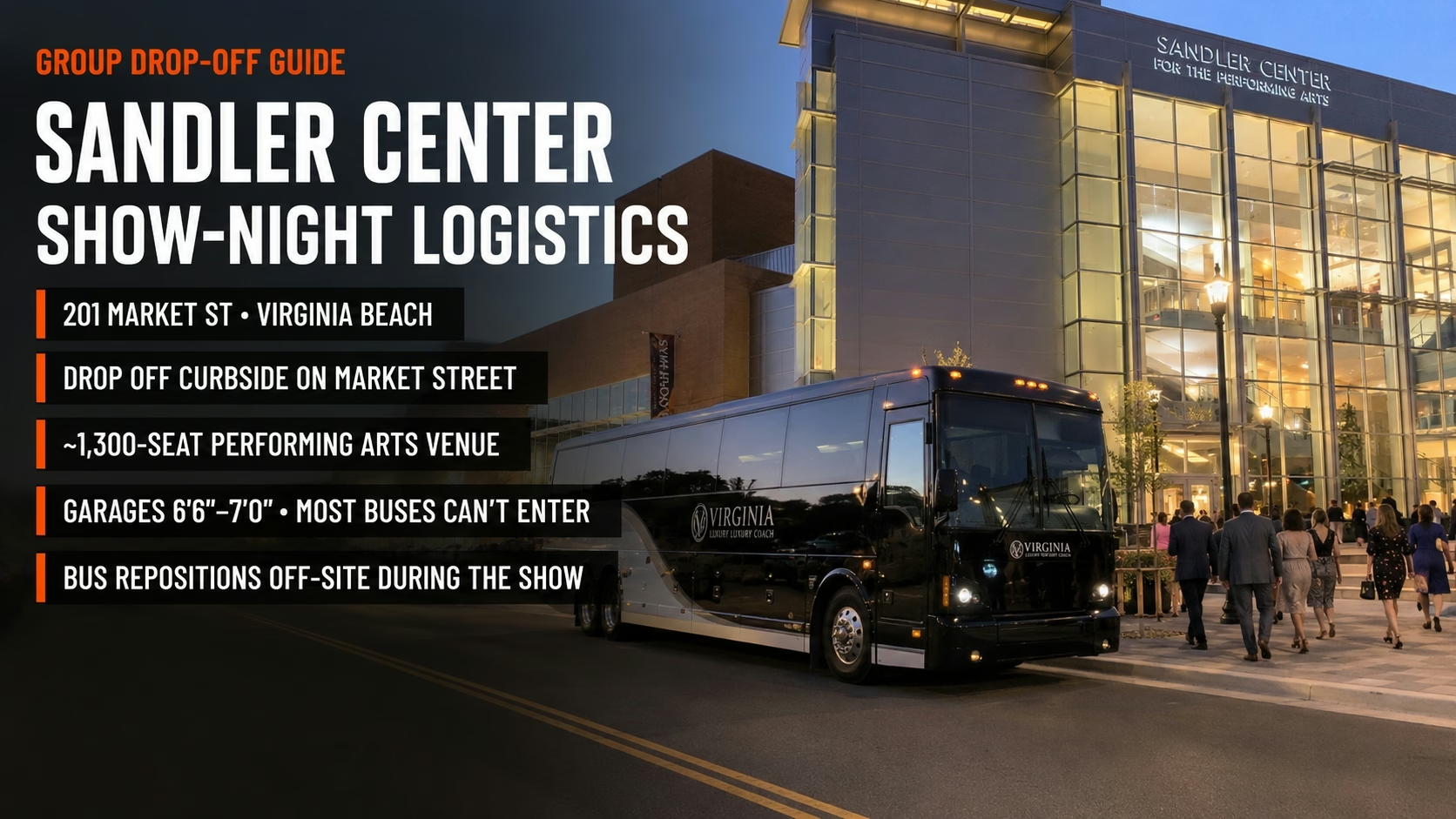
For charter buses and other oversized vehicles, the standard approach to Virginia Beach Oceanfront events is to use Atlantic Avenue for through travel, with designated loading and unloading along specific numbered cross streets near the event footprint. During major events, the city often establishes or adjusts drop-off zones along those numbered side streets to keep Atlantic Avenue traffic moving. Because these zones can shift event to event and year to year, the most reliable step is to confirm the current drop-off protocol directly with the tournament organizers and the city's event transportation guidance before tournament weekend.
The NASSC's official site and the City of Virginia Beach are both primary sources for that information.
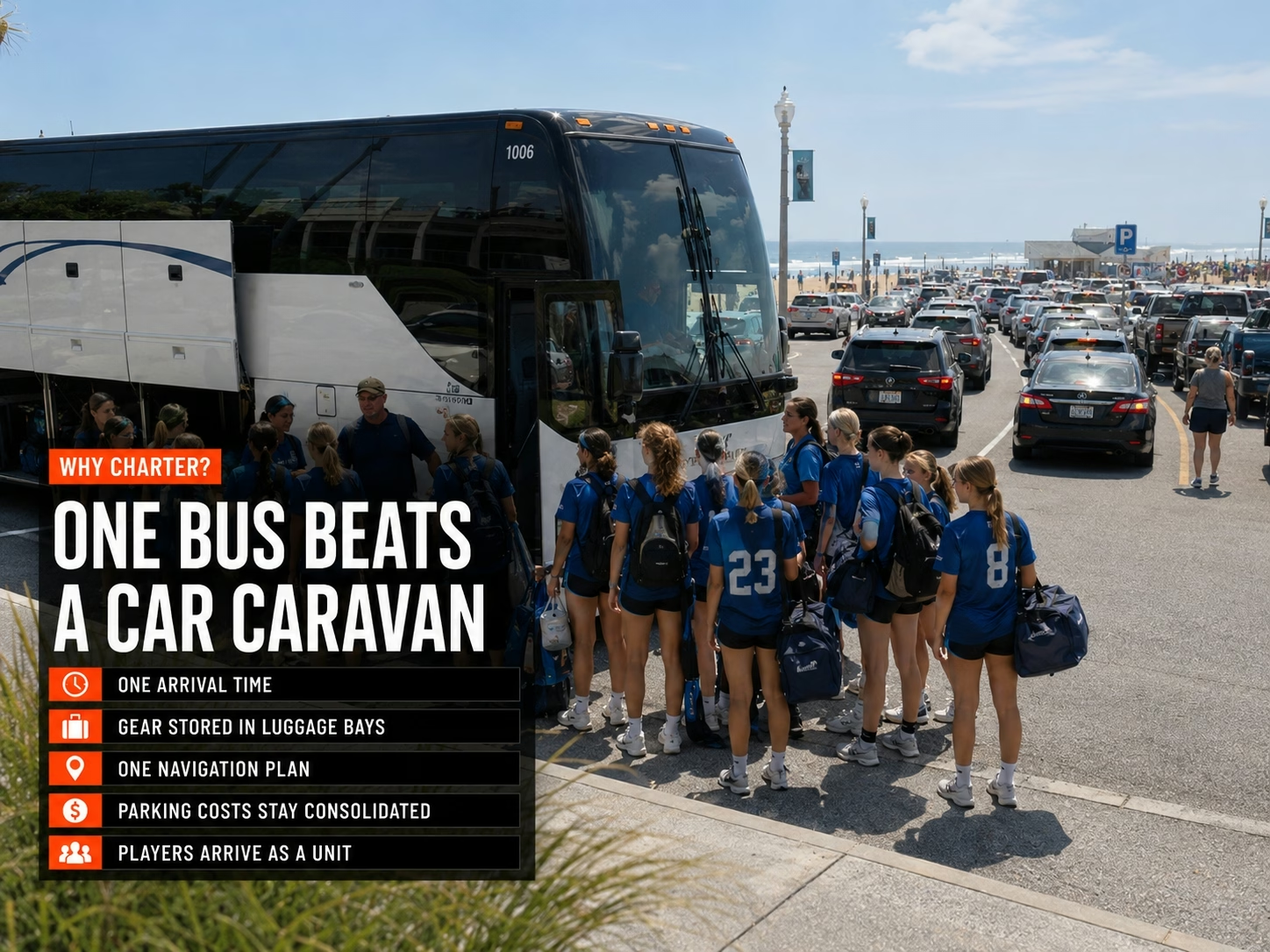
What doesn't change regardless of which cross street is designated: a single charter bus drops your entire group at one location, at one time, in one coordinated stop. Your group disembarks together, heads for the same check-in tent, and moves toward the same field assignment. After drop-off, the bus can stage in an offsite area or return at a scheduled pickup time at the end of match play.
Compare that to the alternative — a twelve-car caravan approaching Atlantic Avenue from different directions during a packed tournament morning — and the value of one vehicle becomes obvious before anyone even touches a ball.
Why One Bus Beats a Caravan of Cars to the NASSC
Every team coordinator who has managed a multi-car caravan to a beach tournament knows exactly how the morning goes. Someone misses the exit. Someone's navigation takes them through downtown.
The family with the equipment bag got stuck behind a drawbridge. Kickoff is in 40 minutes and four players are still 20 minutes away. The team arrives fragmented, the coaches are stressed, and the warm-up is cut short.
A single charter bus eliminates that scenario entirely. Here's how the two options actually compare when a full team or supporter group is making the run to Virginia Beach:
| Charter Bus | Multiple Cars | |
|---|---|---|
| Does the team arrive together? | Yes — one vehicle, one arrival time | No — cars trickle in at different times |
| Parking costs | One staging arrangement or offsite wait | $15–$25+ per car, per day, multiplied across the group |
| Who handles navigation? | One vehicle handles it | Every car in the group navigates independently |
| Team gear and equipment | Stored in undercarriage luggage bays | Crammed into individual car trunks |
| HRBT / tunnel traffic | One bus navigates it — group relaxes | Every car sits in the same backup independently |
| Pre-match focus | Players travel together, arrive as a unit | Fragmented — energy scattered before first whistle |
| End-of-day pickup | One bus, one meeting point, done | Everyone navigates home tired in separate vehicles |
The per-person cost math often settles the debate for mid-size to large groups. A team of 25 players plus coaches and a handful of family members might easily represent 9–12 cars. At $20+ per car in tournament weekend parking alone, you're spending $180–$240 before accounting for gas across multiple vehicles on a round trip that might be 200–400 miles depending on where you're coming from.
A single bus, split across the full group, often comes out at a comparable or better per-person total — and it keeps your team's pre-match energy intact and focused rather than scattered across an oceanfront garage.
The Drive to Virginia Beach: Routes and Times from Major East Coast Markets
The North American Sand Soccer Championship draws teams from across the East Coast and well beyond, which means the drive to Virginia Beach looks very different depending on your starting point. Virginia Beach sits at the southeastern tip of Virginia, at the terminus of I-64 — a genuine destination city that requires you to go all the way there, not through it. For teams arriving from the south, US-17 and I-95 are common approaches.
From the west and north, I-64 East is the primary corridor. From the Carolinas, US-58 East through Emporia connects to I-64 via Suffolk.
| Starting Market | Approx. Distance | Typical Drive Time | Primary Route |
|---|---|---|---|
| Norfolk / Hampton Roads | ~15–25 miles | 20–35 min | I-264 East or I-64 East to I-264 |
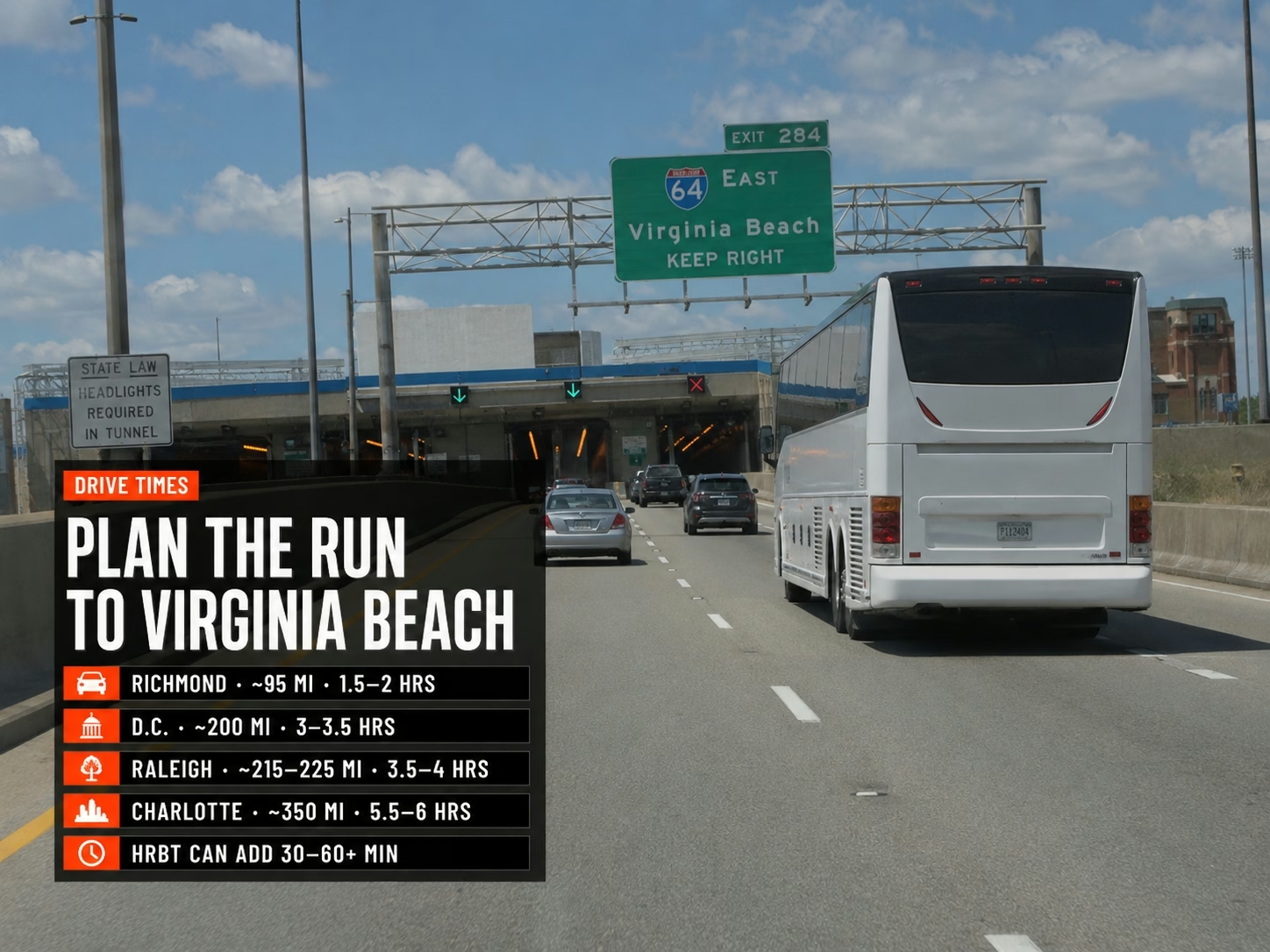
| Richmond, VA | ~95 miles | 1.5–2 hours | I-64 East |
| Charlottesville, VA | ~195 miles | 3–3.5 hours | I-64 East all the way |
| Washington, D.C. | ~200 miles | 3–3.5 hours | I-95 South to I-64 East |
| Baltimore, MD | ~225 miles | 3.5–4 hours | I-95 South to I-64 East |
| Raleigh, NC | ~215–225 miles | 3.5–4 hours | US-64 East or I-95 North to I-64 East |
| Philadelphia, PA | ~325 miles | 5–5.5 hours | I-95 South to I-64 East |
| Charlotte, NC | ~385 miles | 6–6.5 hours | I-85 North / I-95 North to I-64 East |
All distances and times are approximate and vary with traffic, construction, and your exact pickup and drop-off points.
The Hampton Roads Bridge-Tunnel: The One Bottleneck You Need to Plan Around
The Hampton Roads Bridge-Tunnel (HRBT) on I-64 East is consistently one of the most notorious choke points on the East Coast's approach to Virginia Beach. Nearly all traffic from the north, west, and D.C./Richmond corridor funnels through this twin-tube tunnel under Hampton Roads Harbor before reaching the oceanfront — and during peak summer weekends, especially tournament Fridays, backups can stretch miles and add 30 minutes to an hour or more to your arrival time. Virginia's 511virginia.org posts real-time tunnel wait times and is the most reliable source to check before departing.
The Monitor-Merrimac Memorial Bridge-Tunnel (MMMBT) on I-664, crossing the southern end of Hampton Roads between Suffolk and Portsmouth, is the alternate approach that bypasses the HRBT entirely. For teams coming from the Raleigh, Charlotte, or I-95 South corridor, routing via I-664 North can save significant time on congested Fridays. It adds a few miles but removes the tunnel gamble entirely.
A few other timing realities worth building into your plan:
- Friday afternoon departures from D.C., Richmond, and Baltimore collide with both Northern Virginia/I-95 rush-hour traffic and the summer weekend wave heading to the beach. Departing Thursday evening or Friday before 7:00 a.m. makes a meaningful difference.
- Sunday afternoon returns from Virginia Beach head back into a compressed wave of weekend traffic, particularly around the I-64/I-264 interchange. Build extra time into the departure schedule on tournament Sunday.
- The new HRBT expansion lanes are in progress as of this writing and will eventually improve throughput — check current project status via VDOT's Hampton Roads projects page for the latest updates.
Your bus takes on all of this. Nobody in your group needs to study the HRBT wait-time board or debate the I-664 alternate at a rest stop. The navigation problem stays with the vehicle — and your team's energy stays focused on match day.
Choosing the Right Bus for Your Team or Group
The right vehicle is the one that seats everyone comfortably and handles your gear — not the largest vehicle available, and not the smallest one that technically fits. For a tournament trip, matching headcount to vehicle size while accounting for equipment load is the most important booking decision you'll make.
| Vehicle | Capacity | Gear Storage | Best For |
|---|---|---|---|
| Sprinter Van | Up to 14 passengers | Limited — carry-ons and personal bags | Small coaching groups, family clusters, VIP-style transfers |
| Sprinter Limo | Up to 14 passengers | Overhead and rear storage | Small supporter groups, premium-experience travel |
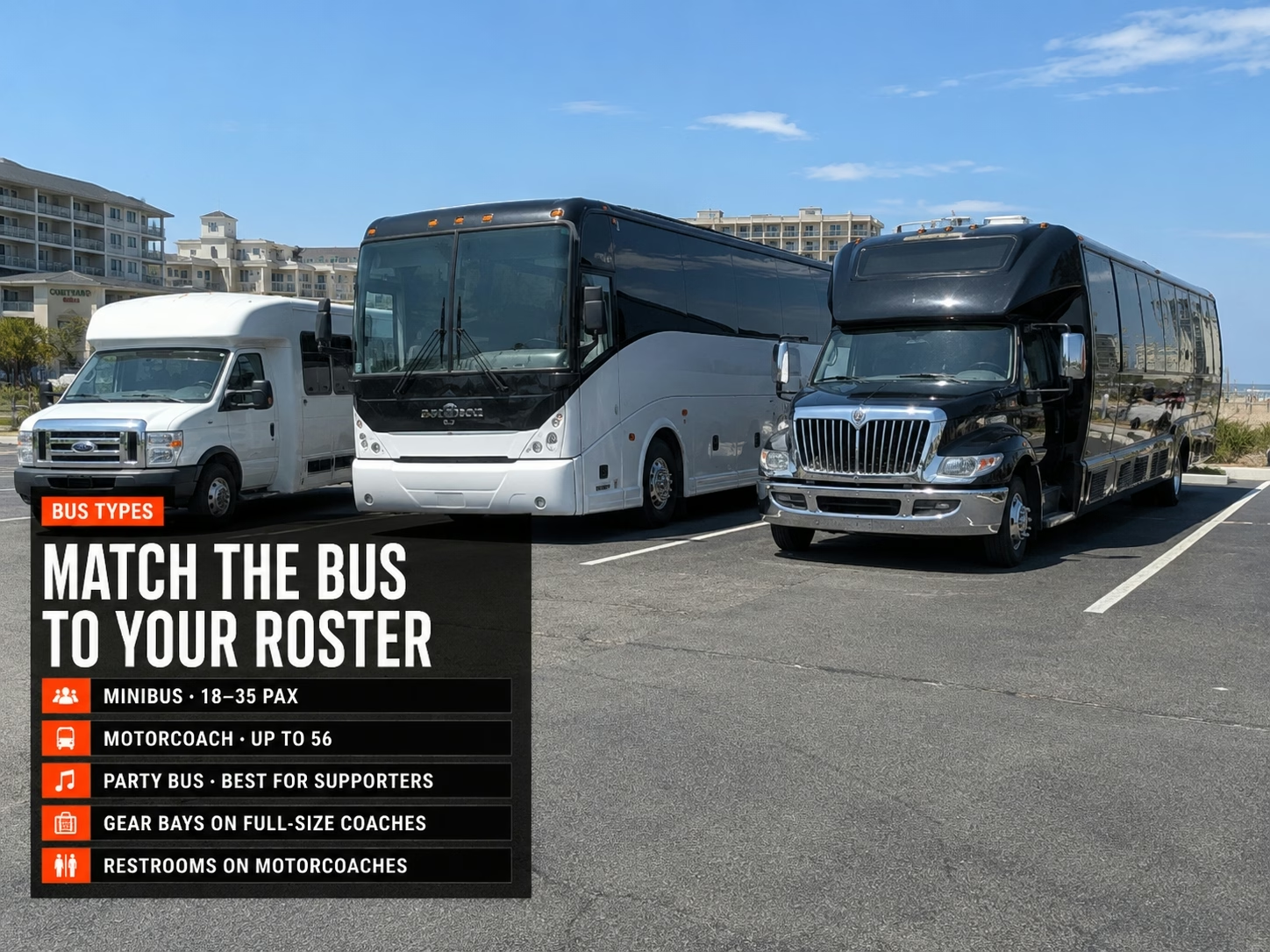
| Party Bus (15–50 passengers) | 15, 18, 20, 25, 28, 30, 40, or 50 passengers | Moderate — built for people, not heavy gear | Fan groups and supporters, bachelorette/birthday groups, teams that want the ride itself to be an experience |
| Minibus (15–35 passengers) | 15–35 passengers | Good — overhead bins and some underfloor | Medium-size rosters, youth squads with moderate equipment, tight family groups |
| Charter Bus (40–56 passengers) | Up to 56 passengers | Excellent — large undercarriage luggage bays | Full-size competitive teams, multi-team club travel, large family groups with substantial gear |
For a typical competitive team traveling to the NASSC, the sweet spot is usually a minibus or a full-size charter bus — and the deciding factor is usually gear. Sand soccer doesn't require cleats, but competitive teams still travel with training equipment, water coolers, medical kits, extra uniforms, and often team canopies or pop-up tents for sideline shade during a multi-day tournament. That gear needs real storage — the kind that lives in a charter bus's deep undercarriage luggage bays, not stacked on seats or wedged in a minibus aisle.
A full-size motorcoach with 40–56 forward-facing seats and generous undercarriage bays is the right call for club-level travel where a full roster, coaching staff, and a handful of family members are all riding together. For smaller rosters traveling light, a 25- to 35-passenger minibus is often the more cost-efficient and manageable choice. Our 15- to 50-passenger party buses work exceptionally well for fan groups and supporter crews who want built-in sound, lighting, and a social layout for the ride — rather than the functional forward-facing setup of a standard minibus.
If anyone in your group requires an ADA-accessible vehicle, that's available — flag it clearly when you request your quote so the right bus is reserved well ahead of your travel date.
What It Costs to Charter a Bus to the NASSC
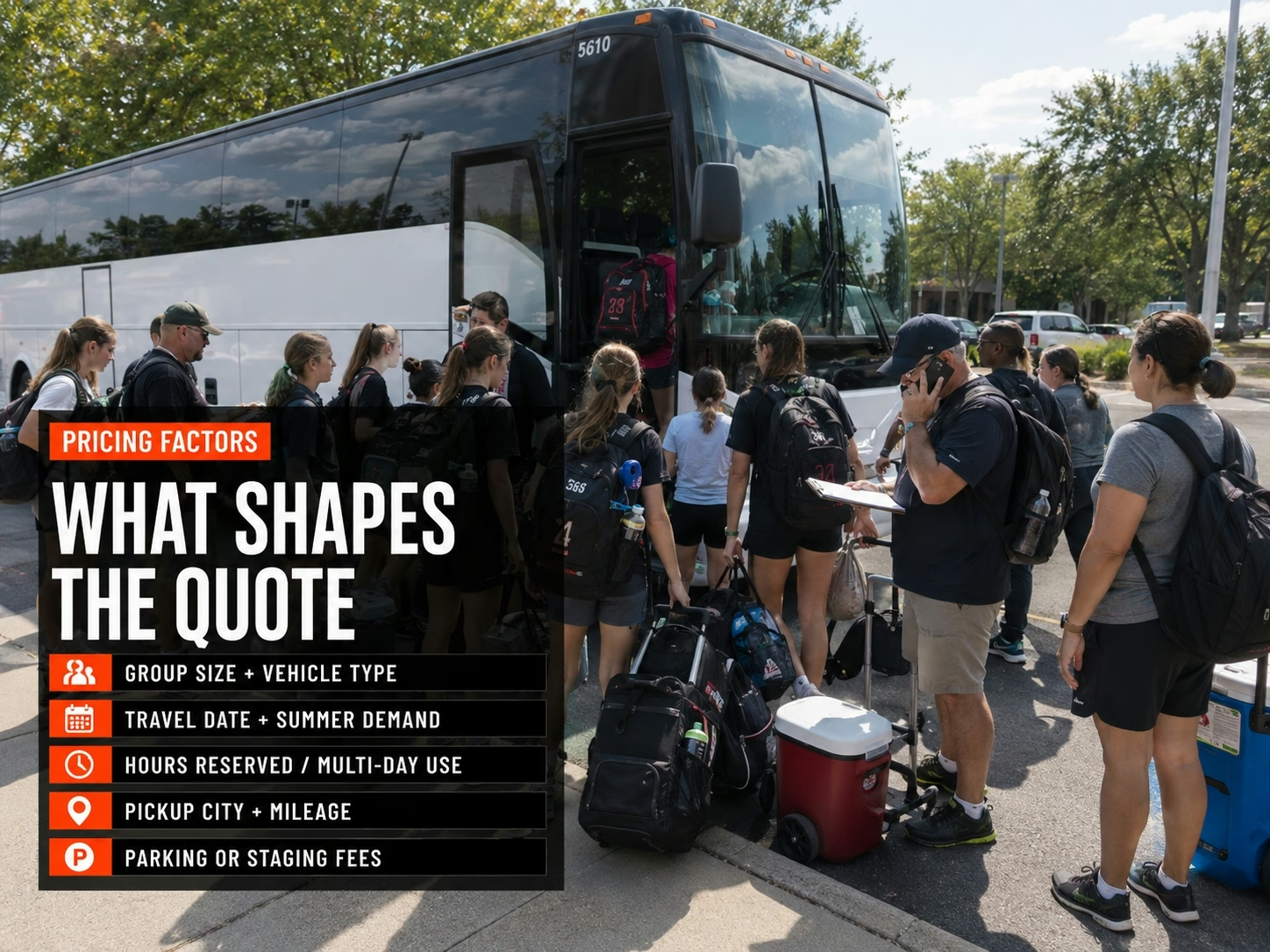
Charter bus pricing is quote-based, not a fixed sticker number. Any company that gives you a single price without asking about your group size, travel date, pickup location, and trip length is estimating. Here's what actually shapes what you'll pay — and how to evaluate a quote you receive:
- Group size and vehicle type. A 15-passenger minibus and a 56-passenger motorcoach carry very different price tags. The larger the vehicle, the higher the base hourly rate — but the lower the cost per person as you fill seats. Right-sizing the bus to your actual headcount is the most direct way to control per-person cost.
- Round-trip distance. A Richmond team driving 95 miles each way has a fundamentally different cost basis than a Charlotte group covering 385 miles each way. Distance drives pricing.
- Hours reserved. Tournament days run long. A bus reserved from a morning pickup in Richmond through an evening return is a full-day commitment, and charter pricing reflects the total hours the vehicle is dedicated to your group.
- Multi-day bookings. Teams competing across an entire tournament weekend — Friday through Sunday — are booking a different kind of service than a single-day round trip. Multi-day arrangements are priced as a package reflecting total time, travel distances, and any overnight positioning.
- Date and seasonal demand. Late June is peak summer for charter transportation across the entire Virginia and Mid-Atlantic market. Virginia Beach in particular is among the highest-demand destinations during that window. Earlier booking equals better vehicle availability and better pricing — these are not marketing tactics, they're basic supply and demand on a busy summer weekend.
The per-person math is where charters usually win the argument once a group exceeds a handful of people. A full-size motorcoach's total cost for a tournament day, split across 40–50 players, coaches, and families, often lands at a per-head number that competes favorably with the combination of individual parking costs ($15–$25+ per vehicle per day), gas across 10+ separate vehicles for a 200–400 mile round trip, and the logistical overhead of managing a multi-car caravan to an oceanfront event. The fewer people splitting the total, the more important it is to right-size the vehicle — which is why headcount is always the first question we ask.
See how our Virginia Beach party bus pricing is structured, or call our team 24/7 at 571-662-5565 for a real quote built around your group size, travel date, pickup location, and tournament schedule.
Planning a Multi-Day Tournament Trip: The Logistics That Actually Matter
The NASSC runs across multiple days, which means transportation isn't a one-time booking — it's a recurring logistics challenge across the full run of the event. Here's how well-organized teams approach the multi-day piece.
Hotel Consolidation Makes Everything Simpler
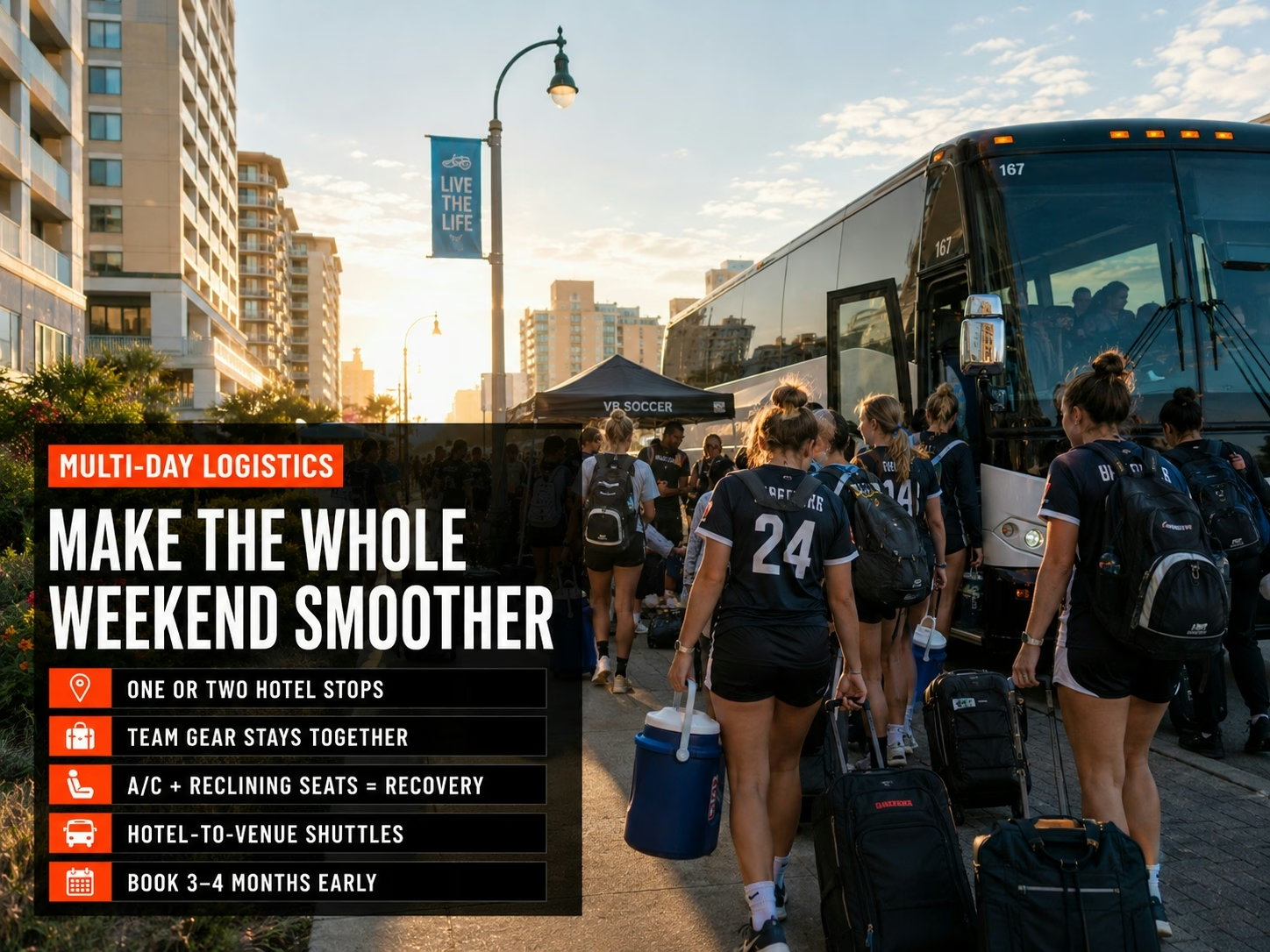
If your team is staying in Virginia Beach for the tournament duration, a single charter bus can make hotel-to-venue shuttles dramatically smoother than individual car trips each morning. Many teams block rooms at properties along the oceanfront or in the nearby resort area along Shore Drive. The advantage of chartering is that the bus can pick up from one or two consolidated hotel stops each morning and deliver the full group to the same drop-off point simultaneously — no coordinating separate departure times, no waiting for stragglers in a parking lot at 7:30 a.m.
Virginia Beach's oceanfront area has no shortage of hotel options along Atlantic Avenue and the parallel resort corridor. Your team's travel coordinator should nail down room block locations and share them when booking transportation so the morning pickup route can be planned efficiently. If the team is spread across two properties, one bus can hit both stops in sequence — far more efficient than 10 families pulling out of two different parking garages in staggered fashion on match morning.
Gear Management Across Multiple Days
One underrated advantage of a charter bus for multi-day tournament travel is the consistent, centralized gear solution it provides. A team canopy, a medical bag, a cooler with tournament-day water and snacks, extra uniforms, ball bags — this volume doesn't fit neatly into passenger car trunks without chaos and daily repacking. A charter bus's undercarriage bays handle it all in one compartment, and the same gear is ready and waiting each morning of the tournament without anyone needing to reorganize anything.
Recovery Between Match Days
Sand soccer is physically demanding in a way that turf soccer simply isn't. The lateral load on legs and lower backs across a multi-day bracket on soft sand is significant, and players competing across three days of matches need genuine rest. A comfortable, climate-controlled charter bus with reclining seats turns the return trip from each match day into actual recovery time — not a tense drive home with cramped legs in a hot car after a long day in the sun.
That difference accumulates meaningfully on day two and three of a five-game bracket.
When to Book
Late June is among the highest-demand weeks on the Virginia Beach and Hampton Roads charter calendar. Full-size motorcoaches — the vehicle most teams need for tournament travel — book up before tournament weekend, often well before. The firm recommendation: lock in your transportation as soon as your roster and travel dates are confirmed, even if the tournament bracket hasn't been finalized yet.
You can adjust departure and return times as the schedule takes shape. You cannot create vehicle availability that doesn't exist.
Transportation Tips for Club and Team Coordinators
If you're managing transportation for a full club with multiple teams, age divisions, coaches, and family groups, a few practices make the difference between a coordinated operation and a tournament-morning scramble.
- Consolidate pickup locations to as few stops as possible. The fewer stops a bus makes on the way to the oceanfront, the faster and simpler every morning gets. Designate one or two central pickup spots — a school parking lot, a centrally located hotel, a park-and-ride — and communicate those as the only options. Three stops is manageable; eight stops turns your departure into a long-route transit experience.
- Assign a vehicle coordinator for each bus. For each vehicle in your operation, designate one adult whose job is maintaining headcount and communicating with the group organizer. When 40 people disembark at a busy beach event, knowing exactly who's on which bus and where the agreed meeting point is prevents the end-of-day chaos of trying to reunite a scattered group by group text.
- Set departure times and hold them. Communicate a firm departure time and mean it. Tournament mornings don't accommodate late arrivals at the bus, and a crew of 40 people waiting 20 minutes for one family is a morale drain before the first whistle. A clear written communication about departure times — sent in advance, not the morning of — sets the right expectations.
- Confirm end-of-day meeting point before anyone leaves the bus in the morning. At Virginia Beach Oceanfront events, the pickup logistics at day's end are at least as important as the morning drop-off. Agree on an exact meeting location — a specific cross street, a named landmark, a parking structure entrance — before the group disperses. Trying to coordinate this by text at 6:00 p.m. with 40 tired people and a bus staged a block over is preventable stress.
For Fan Groups and Supporters: Making a Tournament Weekend Out of It
Not everyone traveling to the NASSC is competing. Virginia Beach is one of the East Coast's most popular summer destinations in its own right, and tournament weekend draws parents, family fans, club supporters, and general beach travelers who want to combine great sand soccer with a couple of days at the shore.
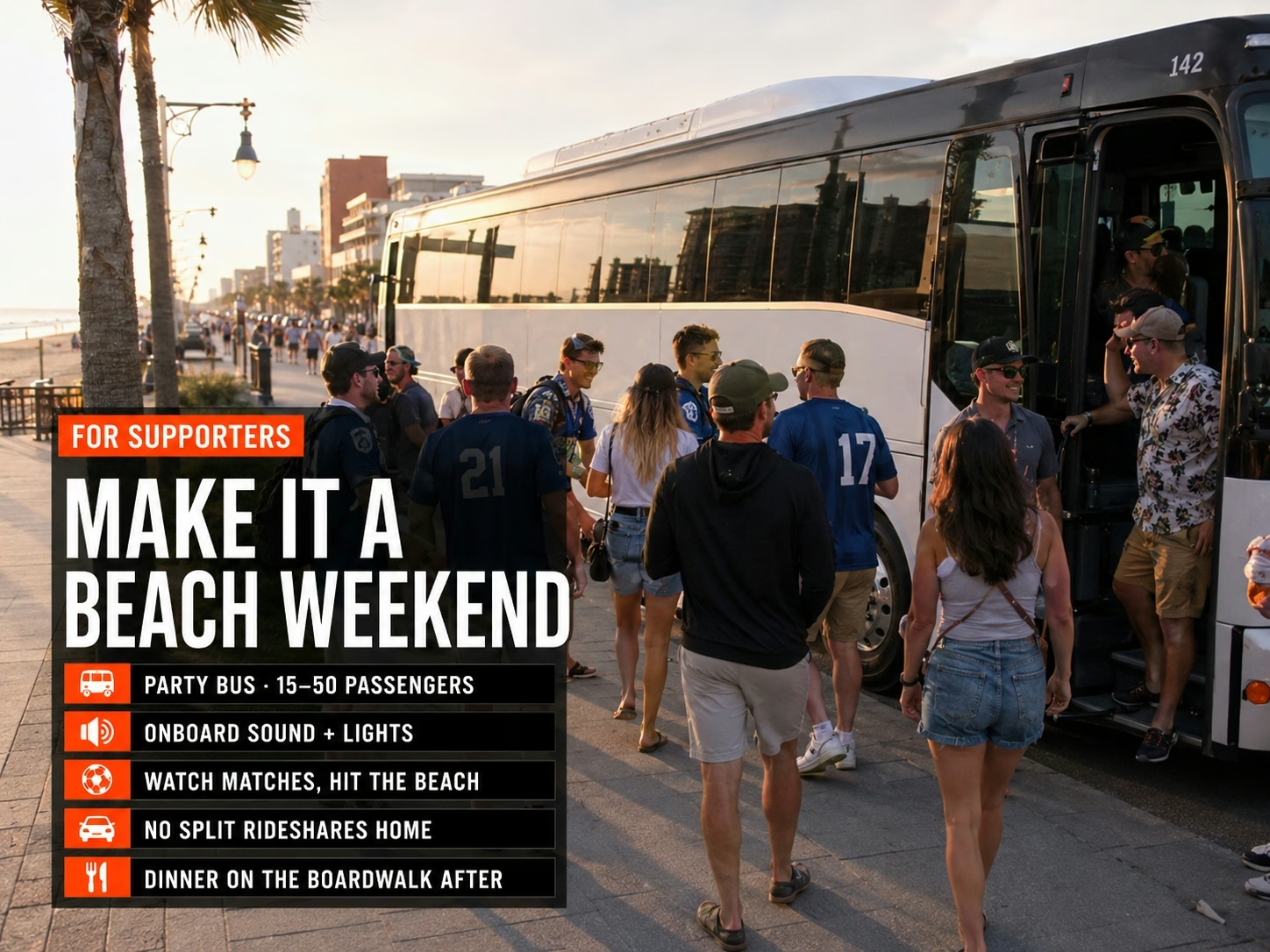
For fan groups, the dynamics of the trip look a little different than team travel — you're optimizing for flexibility and experience rather than pre-match routine and gear management. A party bus rental in Virginia Beach is the natural fit here: built-in sound, lighting, and onboard bar options mean the ride to the oceanfront is part of the day rather than a logistical inconvenience before it. A group of friends or family supporters who want to watch some matches, spend time on the beach, and make a weekend out of the tournament can book a party bus, pregame on the approach, spend the day at the oceanfront, and have a single comfortable ride home lined up when the evening wraps — no surge pricing, no split rideshare, no debate about who has to stay sober for the ride home.
For larger supporter groups — corporate sponsors attending the event, travel agencies building Virginia Beach weekend packages, extended family reunions using the tournament as a reason to convene — a Virginia Beach charter bus rental keeps the full group moving together and removes the coordination overhead of splitting into individual vehicles for a full tournament day. One bus, one meeting point, one departure for dinner on the boardwalk.
What's Around the Tournament Venue: Making the Most of Virginia Beach
The North American Sand Soccer Championship doesn't happen in isolation — it happens on one of the most activity-rich strips of beachfront on the entire East Coast. The Virginia Beach Oceanfront is a fully developed resort area, and the boardwalk that runs alongside Atlantic Avenue has been a destination in its own right for generations.
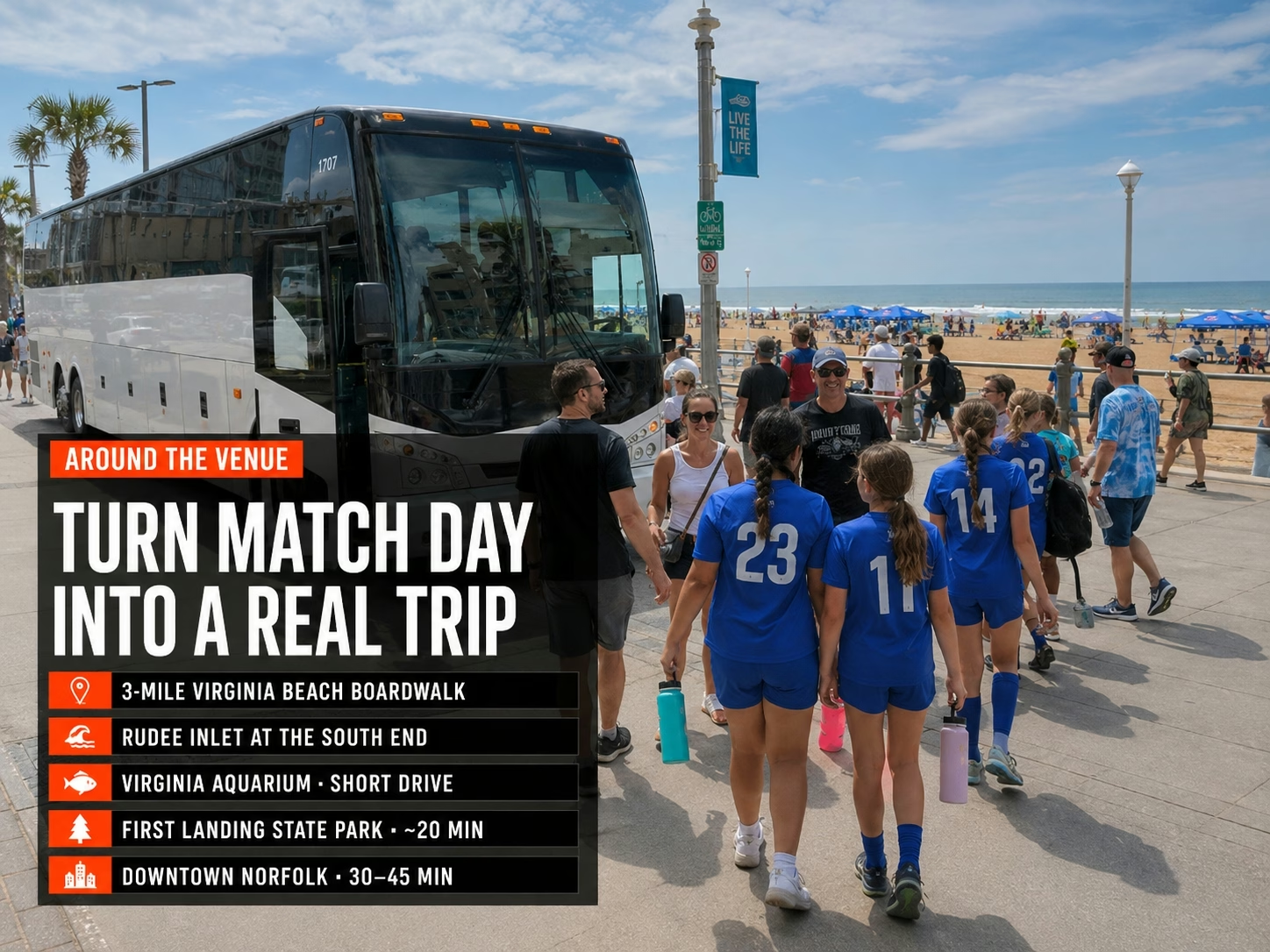
Teams and families with time between matches or after the competition day ends have immediate access to the full lineup of boardwalk restaurants, food vendors, shops, beach rental outfitters, and live entertainment venues. The Virginia Beach Boardwalk itself runs roughly three miles from Rudee Inlet at the southern end to 42nd Street, with direct beach access at every cross street, outdoor dining options throughout, and a continuous path that's purpose-built for pedestrian groups.
For groups extending their Virginia Beach visit beyond the tournament:
- Virginia Aquarium & Marine Science Center (717 General Booth Blvd, Virginia Beach, VA 23451) sits a short drive south of the main oceanfront and is a consistent draw for family groups. Its exhibits focus on Chesapeake Bay ecology, sharks, and marine life native to the mid-Atlantic coast.
- First Landing State Park along Shore Drive to the north is within 20 minutes of the tournament venue and offers kayaking, crabbing, trail hiking through bald cypress habitat, and some of the best camping along the Virginia coast.
- The Norfolk Botanical Garden, the Chrysler Museum of Art, and downtown Norfolk's historic waterfront Granby Street district are all within 30–45 minutes of Virginia Beach for groups willing to cross the water.
- Colonial Williamsburg, Jamestown, and Yorktown form the Historic Triangle about an hour west on I-64 — a natural add-on for groups with extra days.
A charter bus gives your group the flexibility to incorporate any of these between match windows without the hassle of individual car logistics. Drop off at the tournament in the morning, watch your team compete, and have the bus return to take the group to dinner along Shore Drive or back to the hotel while others remain at the beach.
Frequently Asked Questions About Chartering a Bus to the North American Sand Soccer Championship
Where exactly do buses drop off for the NASSC at Virginia Beach?
The tournament fields are set up on the sand at the Virginia Beach Oceanfront, accessible from the boardwalk along the Atlantic Avenue corridor. Charter buses approach from the numbered cross streets and use designated loading and unloading zones. Because these zones can shift year to year and event to event, confirm the current protocol directly with the NASSC's official event guidance and the City of Virginia Beach before your travel date.
When you book with us, we coordinate the specific drop-off approach for your tournament date.
How early should we book transportation for the NASSC?
As early as possible — and realistically no later than 3–4 months before the tournament date. Late June is one of the highest-demand periods for charter transportation across the Virginia and Hampton Roads market. Full-size motorcoaches, the vehicle most tournament teams need, are booked well ahead of peak weekends.
Once your roster count and travel dates are confirmed, lock in transportation immediately — even if the bracket schedule isn't set yet.
Can a charter bus carry team equipment, canopies, and sideline gear?
Yes. Full-size charter buses have large undercarriage luggage bays purpose-built for exactly this kind of cargo — team bags, water coolers, medical kits, pop-up canopies, and extra gear all stow below without taking up any seat space inside. When requesting a quote, describe your gear load specifically so the right vehicle size is matched to your actual needs, not just your headcount.
How do we deal with Hampton Roads Bridge-Tunnel traffic on tournament Friday?
The HRBT on I-64 East is consistently one of the worst bottlenecks on the East Coast's Virginia Beach approach — backups of an hour or more on peak summer Fridays are not unusual. The Monitor-Merrimac Memorial Bridge-Tunnel on I-664 via Suffolk and Portsmouth is the alternate approach that bypasses the HRBT entirely; for groups coming from the south or via I-95, this routing can save significant time on a congested Friday. Check 511virginia.org for live tunnel wait times before any departure.
Can we keep the bus with us throughout the tournament day?
Yes — depending on your booking arrangement, the bus can stay on standby near the venue during match play, or drop the group and return at a scheduled pickup time at the end of the day. Work out the specific plan when you book so there's a clear coordination structure in place for the end of each match day. Having a confirmed pickup time and meeting location established before the group leaves the bus in the morning is the single most important end-of-day logistics decision.
Is it worth chartering for a day trip vs. a multi-day tournament booking?
Both work well depending on your situation. A day-trip charter is ideal for groups coming from within 2 hours — Hampton Roads, Richmond, parts of North Carolina — who are attending one day of the tournament without staying overnight. A multi-day booking makes sense for teams playing across the full tournament weekend who want consistent hotel-to-venue transportation for every match day.
Multi-day charters are structured and priced differently than single-day arrangements — share your complete tournament schedule when requesting a quote so the pricing reflects the actual scope.
What if our match times change during the tournament?
Tournament brackets shift — that's a consistent reality of competitive soccer. When you book, discuss how schedule adjustments work. Most operations can accommodate reasonable changes with advance notice.
Build a clear communication plan into your group's transportation arrangement so the coordinator can reach your charter company directly if match times or departure needs change during the event.
Are ADA-accessible vehicles available?
Yes. If anyone in your group requires wheelchair accessibility or other accommodations, flag it clearly and specifically when you request your quote. ADA-accessible buses are available, and advance notice is essential — particularly on high-demand tournament weekends when vehicle scheduling is tight.
The sooner this need is communicated, the more options are available.
Can the bus handle pickup from multiple hotels?
Yes — a single charter bus can hit two or three consolidated hotel pickup stops in sequence on the way to the oceanfront. More than three stops starts to add meaningful time to the departure sequence, which is why consolidating room blocks at one or two properties when possible makes multi-day tournament travel significantly more efficient.
What amenities are on the bus during the ride?
Full-size charter buses typically include reclining seats, climate control, overhead storage bins, WiFi, power outlets, flat-screen TVs, and an onboard restroom — the restroom being especially relevant on a 3–6 hour trip. Party buses feature built-in sound, color-changing LED lighting, onboard bar setup, and a social seating layout. Minibuses include climate control, reclining seats, and overhead storage.
When you request a quote, mention any specific amenity priorities and we'll match you with the right vehicle from our Virginia Beach fleet.
Book Your Group's Transportation to the NASSC
The tournament is the hard part. The transportation should be simple. One charter bus takes your full team, coaching staff, and family group from a single consolidated pickup point to the Virginia Beach Oceanfront drop-off — no parking scramble, no fragmented caravan, no coordinator spending the first hour of match day fielding texts from families who missed the exit off I-64.
Party Bus Virginia Beach moves teams and groups to the Virginia Beach Oceanfront for major events throughout the summer. Call our team 24/7 at 571-662-5565 or use our online quote tool to see pricing and availability for your group size and tournament date in under 30 seconds. Book early — late June fills fast, and the right vehicle for your roster won't wait.
See our full Virginia Beach party bus pricing, explore our fleet options, or review our Virginia Beach sporting event transportation page to learn more.